
When I was about four, my mother had a little routine. After finishing her grocery shopping, she’d occasionally buy a Lotto ticket at the checkout.

At the time, I didn’t fully understand what it was I knew it was some kind of competition that excited a lot of adults, but the details were a mystery to me. As I got a little older, my curiosity grew. I must have been around four years old when, just before my mother was about to pay for our groceries, she handed me a lotto sheet and told me I had to choose six numbers.
I still remember the first time she handed me that slip filled with rows of numbers. I was holding it, completely fascinated, thinking, “Wow, there are so many numbers to choose from.” I was completely fascinated by the idea of winning money just by picking the right set of numbers.
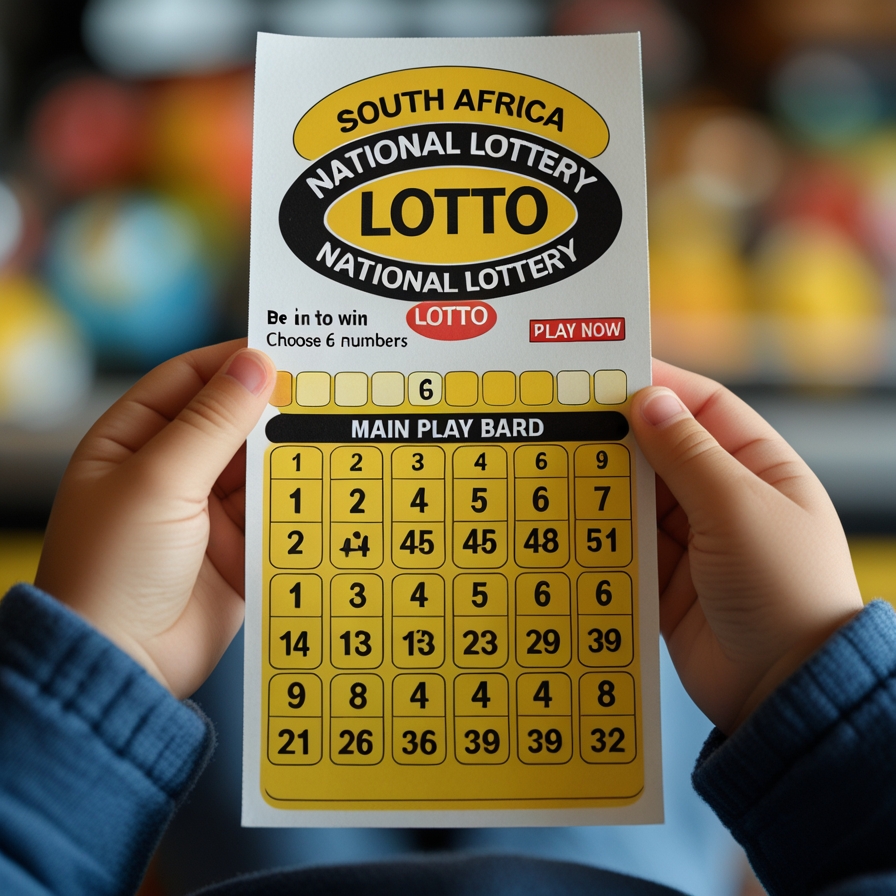
That excitement didn’t last long, though. It quickly turned into mild panic when my mom nudged me to hurry up, the line behind us was getting impatient. I ended up choosing a handful of random numbers just to get it over with.
I took a quick look at the people waiting behind us. Some tapping their feet, others watching impatiently and I could suddenly feel all their eyes on me.

So I ended up picking a bunch of random numbers (not the ones I actually wanted) just to get it over with.
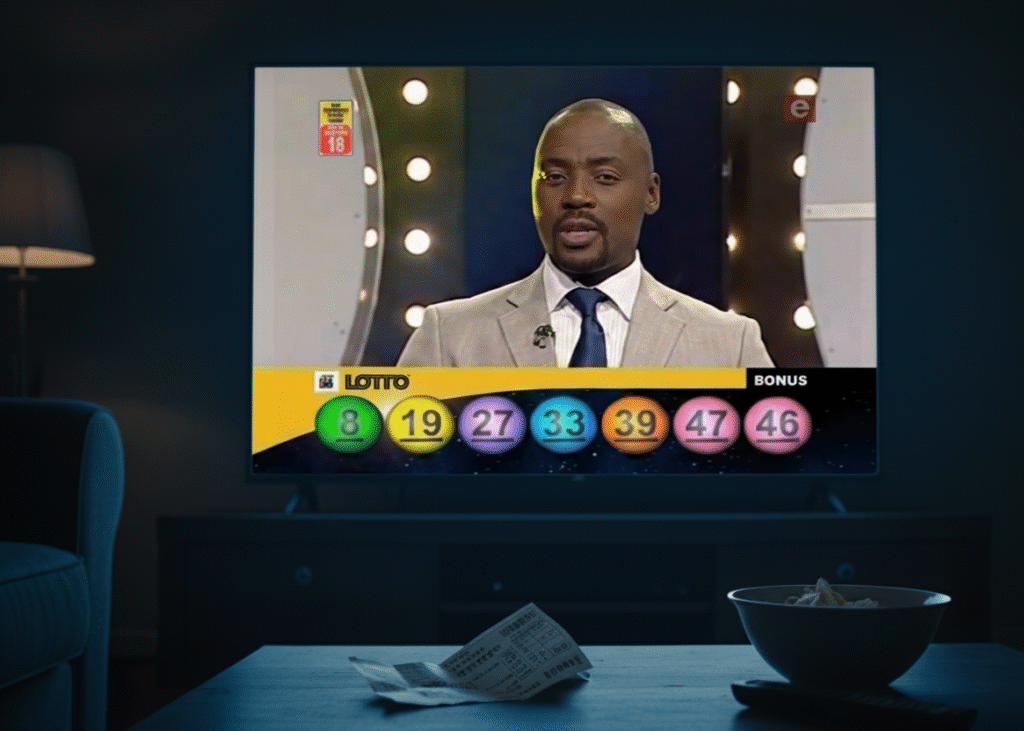
Later that evening, the excitement came rushing back as the live Lotto draw began on TV.

I watched the presenter call out each number one by one, but none of them matched mine. I felt crushed, completely convinced that if I’d just had a little more time and wasn’t rushed earlier, maybe I would’ve chosen “luckier” numbers.
How the South African Lotto Works (for anyone born under a rock)
1. The Basics
You pick 6 numbers from 1 to 52.
During the draw, 6 winning numbers and 1 bonus number are randomly selected.
You can play at a physical retailer (using a Lotto slip) or online via the official National Lottery website or app.
(Back then, the internet wasn’t really a thing so people usually always played in-store.)
2. Ticket Cost (current price)
One Lotto entry costs R5.00
You can add “Lotto Plus 1” and “Lotto Plus 2” for an extra R2.50 each, giving you extra chances to win using the same numbers.
3. How You Win
| Match | Prize | Notes |
|---|---|---|
| 6 numbers | Jackpot | Can reach tens of millions |
| 5 + bonus | 2nd prize | Often hundreds of thousands |
| 5 numbers | 3rd prize | A few thousand rand |
| 4 numbers | Mid-tier | A few hundred rand |
| 3 numbers | Lower tier | Small cash win or free ticket |
| 2 + bonus | Smallest prize | Usually a free ticket |
4. Draw Days
Draws take place twice a week, Wednesday and Saturday around 8:56 PM.
Entries usually close around 8:30 PM on draw nights.
Eventually, after enough failed attempts, my younger self started to see through the illusion.
The excitement faded and the reality of how miniscule the odds of winning are set in and it just became another thing adults played for fun.
Until one day…
We were at a braai, and I overheard my mom and her friends talking. One of them mentioned a woman she knew who had actually won the Lotto. I was mind-blown
My younger self couldn’t believe it, it was real and someone nearby had done it, not a stranger from TV, or some far-off story.
Winning wasn’t something that happened in movies; it was happening right here.
I listened a little closer as the same woman went on to explain that this lady had played the exact same set of numbers for many years. She didn’t specify how many sets or how long, just that she had been consistent.
It made sense. If she kept playing the same numbers draw after draw, her chances of winning would be much higher than the average player, who probably picks random numbers, birthdays, or numbers they consider lucky, and only plays occasionally. It wasn’t anything groundbreaking, but to my younger self, it proved there was a strategy, a formula, to increase your odds. (Granted, I could have figured this out a little faster if I’d thought about it more.)
The lesson was simple: playing the same set of Lotto numbers consistently dramatically increases your odds. Playing a set just once barely moves the needle, but if you stick with the same numbers every draw, your chances grow over time.
Another obvious way to improve your odds is to buy more tickets:
- This literally increases your chances.
- For example, if the odds of winning are 1 in 20 million per ticket, buying 10 tickets gives you 10 in 20 million not huge, but better than one.
(Side note: I actually discovered a method that could drastically improve your chances even further but it’s not about studying historical Lotto data or heat maps of “hot numbers” (which, statistically, don’t help). It’s something related to the ball machine itself, but I won’t reveal it here for safety reasons)
That’s when it hit me: the same principle applies to almost anything in life where the odds are stacked against you. Take jobs, for example. Most people hope for luck, they send out a handful of applications, cross their fingers, and wait. But if you treat it like the lotto woman treated her numbers with relentless, repeated effort your odds skyrocket.
The secret? Applying to enough opportunities. Not a few, not just the ones that feel perfect. I’m talking about hundreds, even a thousand applications. Just like playing the same numbers every draw, this strategy isn’t glamorous, but it works. And that’s exactly what I’m going to show you in the next section: how to turn persistence into a 99% success rate.
The Thousand-Ticket Method
When most people apply for jobs, they think in small numbers five, ten, maybe twenty applications before they feel discouraged. But when you zoom out, the odds tell a different story.
If each application represents a single “ticket,” then sending out only ten means you’ve only entered the draw ten times. Even if you’re highly qualified, it’s still a game of probability maybe one in fifty, one in a hundred, depending on the industry.
So the solution isn’t to “hope harder.” It’s to increase your sample size.
The Thousand-Ticket Method is built on one simple idea:
The more quality applications you submit, the higher your statistical chances of getting hired are.
It’s not about sending spam applications or applying blindly. Each “ticket” should still be a legitimate entry a properly filled-out, thought-through application. But when you scale that up to hundreds or even a thousand, something predictable starts happening: responses.
You start getting callbacks.
You start seeing patterns in what works.
You start improving naturally through repetition.
It’s not luck anymore -> it’s math.
Most people underestimate just how many “tickets” it takes to win. They stop too early, right before probability starts working in their favor.
The key isn’t just effort it’s volume with consistency. That’s what separates the people who “can’t find anything” from the ones who suddenly have multiple offers on the table